The Impact of Blockchain Technology on Casino Slots: Transforming Trust, Transparency, and Player Experience
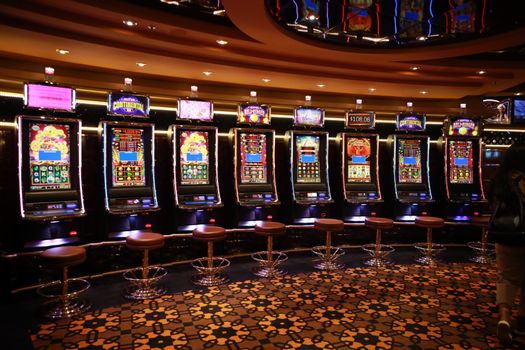
Casino slots have long been a centerpiece of both brick-and-mortar and online casinos, captivating players with their vibrant themes, enticing jackpots, and ever-evolving gameplay. However, as technology continues to reshape the gambling landscape, few innovations have sparked as much intrigue—and disruption—as blockchain technology. Once solely associated with cryptocurrencies like Bitcoin, blockchain is now making significant inroads into the world of casino slots, promising to revolutionize everything from fairness and transparency to security and payment efficiency.
In this article, we’ll explore how blockchain technology is impacting casino slots, examine the tangible benefits and challenges it brings, and provide a data-driven comparison with traditional slot systems. Whether you’re a seasoned slot enthusiast, a curious newcomer, or an industry stakeholder, understanding blockchain’s role can help you navigate the future of gaming with confidence.
.png)
Understanding Blockchain’s Core Principles in Casino Gaming
Before diving into its impact on slots, it’s crucial to grasp what blockchain actually is. At its core, blockchain is a decentralized digital ledger that securely records transactions across a network of computers. Each entry, or “block,” is linked to the previous one, creating an immutable chain that’s nearly impossible to alter retroactively.
In the context of casino slots, this technology can be applied in several transformative ways:
1. $1: Every spin, bet, win, and payout can be recorded on the blockchain, creating a permanent, public ledger accessible to players and regulators alike. 2. $1: Removing the need for a central authority (like a casino operator) reduces the potential for manipulation or unfair practices. 3. $1: Automated agreements coded on the blockchain can manage payouts instantly and without human intervention. 4. $1: Data stored on the blockchain is encrypted and distributed, making it highly resistant to hacking or tampering.In 2023, the global blockchain gaming market was valued at $4.6 billion, and is projected to reach $65.7 billion by 2027, according to MarketsandMarkets. This rapid growth signals not only wider adoption but also increasing trust in blockchain-based solutions for gaming—including casino slots.
How Blockchain Is Changing Fairness and Trust in Slot Games
One of the most persistent concerns among slot players is fairness. Historically, players have relied on regulators and third-party auditors to ensure that Random Number Generators (RNGs) in slots weren’t rigged. However, even with oversight, doubts about transparency linger.
Blockchain addresses this issue head-on through a concept known as "provable fairness." Here’s how it works:
- $1: Slot outcomes are generated using cryptographic techniques that allow players to verify each result independently. For example, a cryptographic hash of the game’s outcome can be published before the spin, and players can later check that it matches the result, ensuring no tampering occurred. - $1: Every spin and payout is recorded on the blockchain, meaning anyone can review the records in real time.A 2022 survey by the Blockchain Gaming Alliance revealed that 62% of players believe provable fairness is the most significant advantage blockchain brings to online gambling. This sense of trust is attracting a new generation of tech-savvy, transparency-seeking players.
Payments, Withdrawals, and Tokenization: A New Financial Era for Slot Players
Traditional online slots often require players to navigate cumbersome payment processes, endure delays, or pay hefty transaction fees. Blockchain technology is streamlining this experience in several key ways:
- $1: Cryptocurrency transactions occur almost instantly, enabling faster deposits and withdrawals compared to traditional banking methods, which can take hours or even days. - $1: By cutting out intermediaries, blockchain-based casinos can offer lower transaction costs. For example, while credit card processing fees can reach 3-5%, blockchain transactions often cost mere cents. - $1: Players from countries with strict gambling regulations or limited banking infrastructure can participate using cryptocurrencies like Bitcoin, Ethereum, or stablecoins. - $1: Many blockchain casinos now issue their own tokens, which players can use for betting, accessing exclusive games, or earning loyalty rewards.According to Statista, the number of global crypto wallet users surpassed 84 million in 2023, up from just 10 million in 2016—a clear indicator that the market is ripe for blockchain-powered slot experiences.
Security, Player Privacy, and Data Protection in Blockchain Slots
Security is paramount in online gambling, where financial and personal information is at risk. Blockchain’s architecture offers several crucial advantages:
- $1: Because data is distributed across thousands of nodes, hacking a blockchain is exponentially more difficult than breaching a centralized database. - $1: Once a transaction (like a bet or payout) is recorded on the blockchain, it cannot be altered or deleted, reducing the risk of fraud. - $1: Blockchain slots often require only a crypto wallet address, rather than extensive personal details, protecting users from data breaches and identity theft.A 2021 report by Chainalysis found that while only 2% of global online gambling revenue currently flows through blockchain-based platforms, the segment is growing at over 20% annually, driven largely by enhanced privacy and security features.
Comparing Traditional vs. Blockchain-Based Casino Slots
To better illustrate the impact of blockchain technology on casino slots, let’s compare key features of traditional and blockchain-based slot systems:
| Feature | Traditional Online Slots | Blockchain-Based Slots |
|---|---|---|
| Fairness Verification | Regulator audits, closed-source RNG | Provably fair algorithms, public verification |
| Transaction Speed | 1-5 business days (withdrawals) | Minutes to hours (crypto withdrawals) |
| Transaction Fees | 2-5% typical | Less than 1% |
| Security | Centralized data, higher breach risk | Decentralized, encrypted ledger |
| Player Privacy | Full KYC, personal info required | Wallet-based, minimal data required |
| Transparency | Limited, dependent on operator | Full, public blockchain records |
This comparative overview highlights the tangible benefits blockchain brings—but also hints at some challenges, such as user familiarity with cryptocurrencies and regulatory acceptance.
Challenges and Limitations of Blockchain Adoption in Casino Slots
Despite its many advantages, blockchain technology isn’t a panacea for all the challenges facing online slots. Key hurdles include:
- $1: Many jurisdictions have yet to establish clear rules for blockchain gambling, leading to legal gray areas for operators and players alike. - $1: Not all players are comfortable using cryptocurrencies or navigating blockchain interfaces, which can limit adoption. - $1: While blockchains like Ethereum offer robust features, high demand can lead to congestion and increased transaction fees—a problem known as “gas fees.” - $1: The anonymity afforded by blockchain, while beneficial for privacy, can make it harder for operators to enforce age restrictions and monitor problem gambling.In 2022, the UK Gambling Commission reported that only 5% of online gamblers had used blockchain-based platforms, underscoring the need for ongoing education, innovation, and regulatory clarity.
Future Prospects: What’s Next for Blockchain and Casino Slots?
Looking ahead, blockchain’s potential to disrupt and enhance the slot gaming industry appears boundless. Several trends are emerging:
- $1: Blockchain slots are beginning to integrate with decentralized virtual worlds, allowing for more immersive, interactive experiences. - $1: Non-fungible tokens (NFTs) are being used to create unique, collectible slot symbols or bonus features, giving players true ownership of in-game assets. - $1: Blockchain enables seamless play across multiple casinos or gaming platforms, with player balances and achievements easily transferable. - $1: As governments catch up, clearer frameworks are expected to boost consumer confidence and drive broader adoption.By 2027, industry analysts predict that over 15% of online slot revenue could be generated via blockchain-powered platforms—a fivefold increase from 2023.
Key Takeaways on Blockchain’s Impact on Casino Slots
Blockchain technology is fundamentally transforming the world of casino slots, offering unprecedented levels of fairness, transparency, security, and efficiency. While challenges remain—particularly around regulation and user education—the trajectory is clear: blockchain is set to play an increasingly vital role in the future of slot gaming.
Players stand to benefit from provably fair outcomes, faster and cheaper transactions, and enhanced privacy, while operators can tap into new markets and deliver cutting-edge experiences. As blockchain adoption grows, expect to see the lines between gaming, finance, and digital ownership blur, ushering in a new era for casino slots.