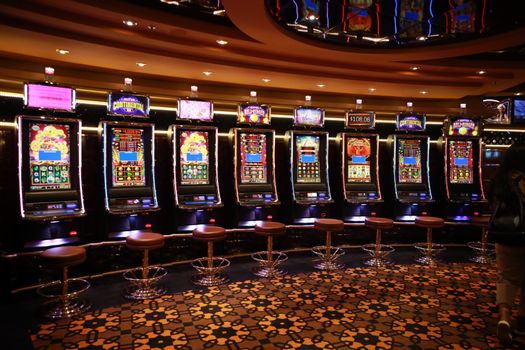
The Emergence of Casino Slots in Global Markets: A Transformative Journey
Casino slots have come a long way since their humble beginnings in the late 19th century. From mechanical one-armed bandits to the vibrant, digital experiences of today, slot machines have steadily expanded their reach and influence. In recent decades, their proliferation has not been limited to Las Vegas or Atlantic City; casino slots now dominate gaming floors and online platforms across continents. The emergence of casino slots in global markets is a story shaped by technological innovation, shifting regulations, economic impact, and evolving player preferences. This article delves into how casino slots have taken root worldwide, the driving forces behind their spread, and what this means for the future landscape of gaming.
The Historical Expansion of Casino Slots Across Continents
The journey of casino slots from American saloons to a global phenomenon is remarkable. The first slot machine, Charles Fey’s Liberty Bell, appeared in San Francisco in 1895. By the mid-20th century, slots were fixtures in U.S. casinos, but their presence abroad was limited by differing attitudes toward gambling.
Europe’s acceptance of slot machines gained momentum in the 1960s, with notable adoption in the United Kingdom after the Betting and Gaming Act of 1960. This legislation paved the way for fruit machines in pubs and betting shops, a trend that quickly spread to other European countries. Australia followed with the introduction of “pokies” in the 1950s, leading to a thriving slots market that today accounts for over 60% of the nation’s gambling expenditure.
.png)
The real global transformation, however, surged in the 21st century. The rise of digital technology and the internet enabled casino slots to leap geographical boundaries. By 2023, the global casino and online gambling market was valued at $263.3 billion, with slots as a major revenue driver. Today, more than 100 countries have legalized some form of slot gaming, either in land-based casinos or online.
Regulatory Shifts and Market Liberalization
One of the most significant factors behind the global spread of casino slots has been regulatory change. Countries that once prohibited gambling have revised their laws to capture new tax revenues and curb black-market activity.
For example, Macau’s 2002 decision to liberalize its gaming industry dramatically altered the Asian casino landscape. Within a decade, Macau overtook Las Vegas as the world’s top gambling destination, with slot machines playing an increasingly vital role alongside table games. By 2022, Macau’s gross gaming revenue reached $5.25 billion, with slots accounting for about 10% of the total.
Similarly, several European nations, including Spain, Italy, and Romania, have modernized their gambling regulations since the 2000s. The United States, historically fragmented by state-by-state laws, has seen online slots flourish as a result of recent regulatory changes. Following the Supreme Court’s 2018 ruling to repeal PASPA, more than 30 U.S. states now offer some form of legalized gambling, including slots.
The table below highlights the regulatory status and slot market size in select regions as of 2023:
| Region | Legal Status of Slots | Estimated Slot Market Size (USD) | Key Regulatory Milestone |
|---|---|---|---|
| United States | State-by-state (most states legal) | $45.4 billion | PASPA repeal (2018) |
| Macau, China | Legal (regulated) | $525 million | Gaming liberalization (2002) |
| Australia | Legal (regulated) | $12.8 billion | Expansion of pokies (1950s onward) |
| United Kingdom | Legal (regulated) | $3.2 billion | Betting and Gaming Act (1960) |
| Germany | Legal (regulated) | $2.9 billion | Interstate Gambling Treaty (2021) |
| Canada | Legal (regulated) | $2.1 billion | Provincial legalization (1990s-2000s) |
These changes have provided a structured, safe environment for slot gaming, allowing governments to collect taxes and regulate player protection measures, such as responsible gambling tools and age verification.
Technological Innovation and the Digital Slot Revolution
The global emergence of casino slots is inseparable from advances in technology. The digital revolution has shattered physical and jurisdictional barriers, enabling access to slot games from virtually anywhere.
The first online casino launched in 1994, and by the early 2000s, online slots had become a staple. Today, more than 60% of online casino revenues stem from slots. Mobile technology has further fueled growth; research by H2 Gambling Capital estimated that in 2023, over 57% of online gambling transactions worldwide were conducted via mobile devices.
Technological developments have also transformed the slot experience. Modern slots offer immersive 3D graphics, interactive bonus rounds, and even skill-based elements. Random Number Generators (RNGs) ensure fairness, while blockchain and cryptocurrencies are being integrated for greater transparency and security. Virtual reality (VR) and augmented reality (AR) slots are on the horizon, promising to revolutionize player engagement further.
A notable example is Sweden’s NetEnt, a global slot developer whose games are available in over 100 countries and account for more than 17% of the European online slots market. Innovations like progressive jackpots have also attracted international attention, with Microgaming’s Mega Moolah slot awarding a world-record jackpot of €19.4 million in 2021.
Economic Impact and Social Considerations
The expansion of casino slots into global markets has significant economic and social ramifications. On the economic front, slots are a major revenue stream for casinos and governments alike. For instance, in Nevada, slots generated $8.7 billion in gaming revenue in 2022, making up 63% of the state’s total gaming income. In Australia, slot machines contribute an estimated $5 billion annually in taxes, supporting public services and infrastructure.
Slots also create employment opportunities in manufacturing, software development, casino operations, and regulatory bodies. The global gaming industry employs over 1.8 million people, with a substantial portion working in slots-related roles.
However, rapid expansion has raised concerns about gambling addiction and social harm. Some countries, like Norway and Singapore, have implemented strict controls on slot access, including loss limits, self-exclusion programs, and public awareness campaigns. The UK Gambling Commission mandates responsible gambling features, such as time and spending limits, on all online slots.
Cultural Adaptation and Market-Specific Trends
As casino slots have entered new global markets, they have adapted to fit local tastes, cultures, and regulations. Game themes, payout structures, and bonus features are often tailored to resonate with specific audiences.
In Asia, for example, slots frequently feature motifs from Chinese mythology or popular zodiac animals, catering to local superstitions and cultural preferences. In Latin America, slots may incorporate soccer, carnival, or indigenous themes. In the Middle East, where gambling is largely restricted, social gaming and free-to-play slots have emerged as popular alternatives.
Market-specific trends also influence slot design and play styles. In Japan, “pachislot” machines combine elements of traditional slot play with the country’s love for pachinko. In Australia, high-denomination “pokies” dominate, while European markets often see greater demand for low-stakes, high-frequency games.
The ability of slot developers to adapt to these differences has been crucial in driving the worldwide success of casino slots.
The Future Trajectory of Casino Slots in Global Markets
Looking ahead, the global casino slot market appears poised for continued growth. Analysts at Statista predict the worldwide gambling market will reach $525 billion by 2027, with slots remaining a key component. Several trends are likely to shape the next phase of expansion:
- Wider adoption of regulatory frameworks that balance growth with player protection - Increased integration of artificial intelligence to personalize gaming experiences - Greater use of blockchain for secure, transparent transactions - Expansion into emerging markets in Africa, South America, and Asia as local laws evolveAs casino slots become increasingly sophisticated and accessible, ongoing innovation and responsible gaming initiatives will be essential to ensuring the sector’s sustainability and appeal.
Key Takeaways on the Global Emergence of Casino Slots
The emergence of casino slots in global markets is a dynamic story of adaptation, innovation, and regulation. From their American origins to their status as a cornerstone of both land-based and online casinos worldwide, slots now entertain millions and generate billions in revenue every year. Their global spread has been driven by evolving laws, cutting-edge technology, and a keen sensitivity to cultural differences.
As the industry advances, the challenge will be to balance economic gains with social responsibility, ensuring that casino slots remain a source of entertainment and benefit to society at large.