The Role of Cryptography in Ensuring Fair Play in Casino Slots
Casino slots have come a long way from the lever-pulled, mechanical machines of the past. Today, they exist in both physical and digital formats, captivating millions of players worldwide. But as the industry transitions more and more toward online gaming, the issue of trust looms larger than ever. How can players be certain that the games they play are truly fair and not manipulated behind the scenes? The answer lies in a field that might seem worlds apart from gaming: cryptography.
Cryptography, the science of securing communication and data, has become an essential component in the design and operation of modern casino slots. It underpins the mechanisms that guarantee randomness, transparency, and integrity in these games. In this article, we explore how cryptography works to ensure fair play in casino slots, examine real-world implementations, and look at the future of secure gaming.
Understanding Fair Play in Casino Slots
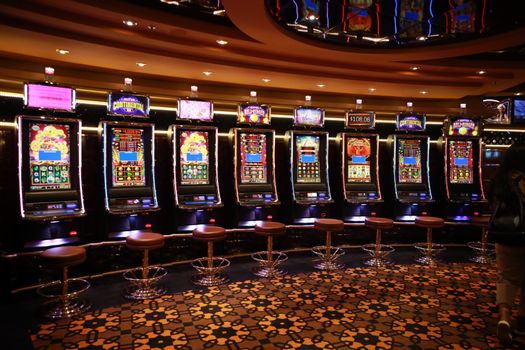
Fair play in casino slots means that every player has an equal and unbiased chance of winning, and that the outcomes are not manipulated by the casino or game provider. Traditionally, physical slot machines used randomizing mechanical parts, but digital slots rely on software algorithms to generate results.
.png)
The central technology for ensuring fairness in digital slots is the Random Number Generator (RNG). An RNG produces a sequence of numbers that cannot be predicted, simulating the randomness of spinning reels. However, without robust safeguards, these algorithms could be tampered with, potentially rigging the outcomes to favor the house.
This is where cryptography enters the scene. By leveraging advanced mathematical techniques, cryptography ensures that the RNG and other game mechanisms remain secure, transparent, and tamper-proof.
How Cryptography Secures Random Number Generation
At the heart of every fair slot game is a secure RNG. Cryptographically secure random number generators (CSRNGs) are RNGs that use cryptographic algorithms to produce sequences that are both random and unpredictable, even to those with insider access.
A 2022 report from the UK Gambling Commission highlighted that over 90% of licensed online casinos now use CSRNGs to power their games. These generators use algorithms such as SHA-256 or AES to create results that are statistically random and impossible to manipulate without detection.
Key features of cryptographic RNGs include:
- Unpredictability: The sequence cannot be guessed, even if previous outcomes are known. - Non-repeatability: Results do not loop or repeat, preventing patterns. - Resistance to tampering: Any attempt to alter the algorithm or its output is either impossible or immediately detectable.For example, consider a slot game that uses SHA-256 hashing. Each spin’s outcome is determined by hashing together various unpredictable inputs, such as server time and player actions, making it virtually impossible for anyone (including the casino) to predict or alter the result.
Provably Fair Gaming: Transparency Through Cryptography
One of the most innovative applications of cryptography in casino slots is the concept of "provably fair" gaming. This system, pioneered by cryptocurrency casinos, allows players to independently verify that each game outcome was fair and unmanipulated.
How does it work? Before a game round begins, the server generates a cryptographic hash of the game's outcome and shares it with the player. After the round, the player can use this hash, along with their own input (often called a "seed"), to verify that the result was determined fairly and not changed after the fact.
This approach has several benefits:
- Transparency: Players have mathematical proof that the outcomes are fair. - Trust: The casino cannot secretly alter outcomes without detection. - Player engagement: Users can participate in the verification process, increasing confidence.A 2023 survey by Statista found that 62% of online slot players who were aware of provably fair systems felt more comfortable playing at casinos that offered them.
Comparing Traditional and Cryptographically Secured Slot Systems
To better understand the impact of cryptography, let's compare traditional slot machine systems with cryptographically secured systems:
| Feature | Traditional Slot Machines | Cryptographically Secured Slots |
|---|---|---|
| Randomness Source | Mechanical parts or basic software RNG | Cryptographically secure RNG algorithms |
| Transparency | Players must trust the casino and regulators | Players can independently verify outcomes |
| Tamper Resistance | Vulnerable to insider manipulation | Highly resistant to tampering |
| Regulatory Oversight | Regular audits required | Built-in cryptographic proofs reduce audit reliance |
| Player Trust | Dependent on casino reputation | Enhanced by mathematical verification |
As the table shows, cryptographic technologies provide a significant upgrade in fairness, transparency, and security over traditional systems.
Real-World Examples of Cryptography in Casino Slots
Cryptography isn't just a theoretical concept—it's already being used in leading online casinos and slot platforms. Here are a few real-world applications:
1. $1: One of the first major cryptocurrency casinos, Bitcasino.io employs provably fair systems across its slots. Players receive cryptographic hashes before each spin and can verify results in real time. 2. $1: This platform uses blockchain-based smart contracts and cryptographic RNGs to ensure that all slot outcomes are transparent, immutable, and fair. Over 100,000 games are played on its platform each month. 3. $1: eCOGRA, an internationally recognized testing agency, now requires that certified online slots use cryptographically secure RNGs. As of 2024, over 240 online casinos worldwide display the eCOGRA seal, signifying adherence to these standards.These examples demonstrate how cryptography has moved from theory to practice, making fair play a reality for millions of slot enthusiasts.
Regulation and the Future of Cryptography in Casino Slots
Regulators are rapidly adapting to the rise of cryptographic technologies in gaming. The Malta Gaming Authority and the UK Gambling Commission are two leading bodies that have updated their technical standards to include requirements for cryptographically secure RNGs.
With the global online gambling market projected to reach $153 billion by 2030 (Statista, 2023), the need for robust, transparent, and fair systems is only growing. Cryptography is expected to play an even greater role in the future, with developments such as:
- $1: As quantum computers become more powerful, new cryptographic algorithms will be needed to stay ahead of potential threats. - $1: Blockchain and smart contracts can further eliminate the need for trust in a central authority, making all aspects of slot gaming transparent and verifiable. - $1: As player awareness increases, more casinos will be compelled to offer cryptographic verification as standard.These advances will help casinos maintain regulatory compliance, prevent fraud, and give players the confidence to play without fear of unfair manipulation.
Why Cryptography Matters for Casino Slot Players
For the average casino slot player, cryptography may seem like a complex, technical subject. However, its impact is very real and tangible. By securing random outcomes, enabling transparency, and preventing tampering, cryptography protects players from unfair practices and ensures a level playing field.
Here are three key takeaways:
1. Cryptography ensures each slot spin is truly random and cannot be predicted or manipulated. 2. Provably fair systems allow players to verify game integrity themselves, fostering trust. 3. Regulatory bodies and leading casinos are embracing cryptography as a new standard for security and fairness.As online gaming continues to grow, understanding the role of cryptography will help players make informed choices and enjoy their favorite slots with peace of mind.