The Psychology of Casino Slots: Why We Keep Spinning
Slot machines are a universal symbol of the casino experience, captivating millions both in land-based venues and online platforms. Their flashing lights, enticing sounds, and seemingly simple gameplay have a magnetic allure that transcends cultural and generational boundaries. Yet, beneath this glittering exterior lies a sophisticated web of psychological triggers and behavioral science. Why do people keep spinning the reels, even when the odds are stacked against them? Let’s explore the fascinating psychology behind casino slots and uncover what keeps us coming back for more.
The Irresistible Power of Near Misses
One of the most compelling psychological hooks in slot machines is the phenomenon known as the “near miss.” This occurs when the symbols on the reels almost land on a winning combination, such as two jackpot symbols followed by a third that just misses the payline. Research has shown that near misses can be as motivating as actual wins, triggering a powerful urge to spin again.
A 2010 study published in the journal Neuron found that near misses activate the same reward-related brain regions as actual wins, even though no money is won. This neurological reaction gives players the sensation that they are “almost there,” encouraging continued play. Slot machine designers deliberately program these near-miss outcomes as a psychological reinforcement, increasing the frequency of these events to keep players engaged.
.png)
Casino slots can be programmed to generate near misses up to 30% of the time, compared to the actual winning rate of just 2-5%. This manipulation exploits our brain’s learning systems, driving a feedback loop that can be difficult to break.
Random Rewards and the Variable Ratio Schedule
Another fundamental aspect of slot machine psychology is the use of a “variable ratio reinforcement schedule.” This term, coined in behavioral psychology, refers to a reward system where outcomes are delivered unpredictably after an average number of actions—such as spins. This is the same principle that makes gambling and even social media so addictive.
B.F. Skinner, a renowned psychologist, demonstrated that rats pressed a lever more frequently when they received food pellets at random intervals, rather than at fixed intervals. Humans respond in a remarkably similar way. With every pull of the lever or press of a button, slot players anticipate the possibility of a win, precisely because they cannot predict when it will occur. This unpredictability generates excitement and keeps players spinning, sometimes for hours.
In fact, variable ratio schedules have been shown to produce the highest rates of response and are the most resistant to extinction. This is why slot machines are so effective at maintaining player engagement and why it’s so hard to walk away after a string of losses.
Lights, Sounds, and Sensory Immersion
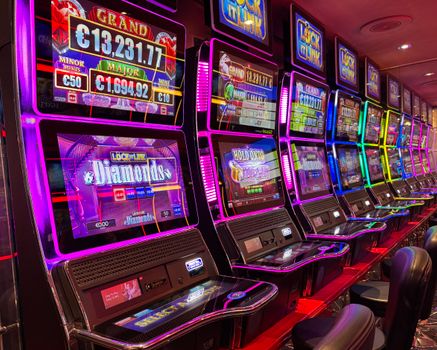
Casinos are carefully designed sensory environments, and nowhere is this more apparent than at the slot machines. The combination of bright, flashing lights and catchy, upbeat sounds is not accidental. Studies have shown that these stimuli trigger the release of dopamine, the brain’s “feel-good” neurotransmitter, enhancing both the pleasure of playing and the urge to continue.
A 2013 study from the University of British Columbia found that audio-visual stimuli in slot machines significantly increased players’ arousal and excitement, even during losing spins. The celebratory jingles and animations that accompany small wins or even non-winning spins can blur the perception of actual success, making players feel like they’re winning more often than they actually are.
Some modern slots feature up to 400 different sound effects and more than 30 different types of visual animations, all meticulously designed to maximize engagement. These cues are so effective that researchers have compared their effects to those found in video game addiction.
The Illusion of Control and Player Agency
Despite being entirely random, slot machines often give players the sense that their actions influence the outcome. This “illusion of control” is a powerful psychological motivator. Features such as “stop” buttons, nudge options, or bonus rounds create a false sense of agency, leading players to believe that skill or timing can improve their chances of winning.
Research by Dr. Luke Clark at the University of Cambridge demonstrated that players who have the ability to start or stop the reels themselves are more likely to overestimate their influence on the game. This belief in personal control can drive longer play sessions and greater spending, even though the outcome is determined by random number generators (RNGs).
Slot machines also use features like “skill stop” buttons, which let players halt the spinning reels, reinforcing the illusion that timing matters. In reality, the result is already determined the moment the player presses “spin.”
Losses Disguised as Wins: The Hidden Reinforcer
A particularly subtle psychological trick used in modern slot machines is “losses disguised as wins” (LDWs). This occurs when a player wins back less than their original bet, but the machine still celebrates the outcome with flashing lights and triumphant sounds.
For example, if a player bets $1.00 and “wins” $0.50, the machine still plays a winning animation. To the brain, this feels like a victory, even though it’s actually a net loss. A 2014 study by the University of Waterloo found that players exposed to LDWs experienced increased excitement and were more likely to keep playing, compared to those who received no such feedback.
LDWs have become increasingly common in modern video slots, with some games featuring these outcomes on over 50% of spins. This reinforcement blurs the line between winning and losing, making it harder for players to recognize when they are actually losing money.
Slot Machine Design: Data and Player Behavior
The effectiveness of these psychological mechanisms is reflected in real-world behavior and casino revenue data. Slot machines are responsible for over 70% of all gambling revenue in U.S. casinos, generating more than $40 billion annually.
Let’s compare some key features and psychological triggers in traditional versus modern video slots:
| Feature | Traditional Mechanical Slots | Modern Video Slots |
|---|---|---|
| Number of Reels | 3 | Up to 6 or more |
| Paylines | 1–5 | 20–100+ |
| Near-Miss Frequency | Low (rarely programmed) | High (up to 30% of spins) |
| Losses Disguised as Wins | Rare | Common (up to 50% of outcomes) |
| Audio-Visual Effects | Limited (bells, lights) | Extensive (hundreds of effects) |
| Bonus Rounds and Features | Few or none | Many (free spins, minigames) |
These enhancements are not just for entertainment—they are meticulously engineered to maximize play time and spending, leveraging decades of psychological research.
The Social and Emotional Pull of Slots
Slot machines tap into fundamental human emotions: hope, excitement, and the thrill of possibility. They provide a temporary escape from stress, routine, or boredom, offering a momentary sense of achievement with every spin. For some, the repetitive nature of spinning the reels becomes a form of relaxation or even a meditative state.
Additionally, the casino environment itself encourages prolonged play. There are no clocks or windows, and drinks are often complimentary. Social features, such as leaderboards or networked jackpots, add another layer of engagement, creating a sense of community among players—even as the activity itself remains solitary.
However, these emotional and environmental factors can also contribute to problem gambling. Studies estimate that about 1–3% of adults in the United States are at risk of developing a gambling disorder, with slot machines being the most commonly cited form of problematic gambling behavior.
Understanding the Allure: Final Thoughts on Slot Machine Psychology
The enduring popularity of casino slots is no accident. Behind every flashing light and cheerful sound lies a carefully crafted system designed to engage, excite, and, ultimately, keep players spinning. From the dopamine rush triggered by unpredictable rewards to the subtle manipulations of near misses and losses disguised as wins, slot machines represent a masterclass in applied psychology.
Understanding these mechanisms can empower players to make more informed decisions and recognize when “just one more spin” is being driven by forces beneath conscious awareness. As the casino industry continues to innovate, it’s more important than ever to appreciate the powerful psychological currents at play—on both sides of the reels.