The Hidden Mathematics Powering Modern Casino Slot Algorithms
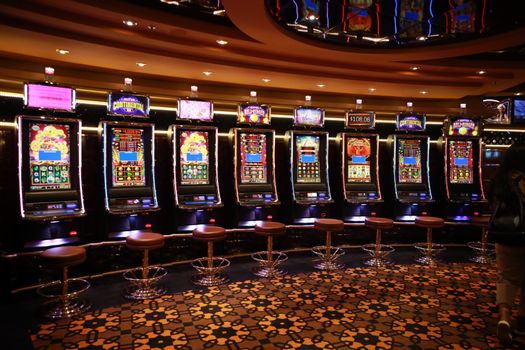
When you pull the lever or tap a button on a casino slot machine, it’s easy to believe you’re simply leaving your fate to chance. But behind every spin is a carefully crafted web of mathematical logic and advanced algorithms. These invisible mechanisms have evolved dramatically since the first mechanical slots of the 19th century. Today’s digital slots are feats of software engineering, using complex mathematical formulas to balance excitement, fairness, and profitability. Let’s dive deep into the mathematical algorithms behind casino slots, exploring not only the basics of randomness but also how game designers use mathematics to create engaging experiences, regulate payouts, and ensure long-term fairness.
From Mechanical Gears to Digital Randomness: A Brief Evolution
The earliest slot machines, like the 1895 Liberty Bell, relied on physical gears and stops to determine outcomes. The number of possible combinations was limited by the number of reels and symbols—often just 10 symbols per reel, leading to 1,000 (10 x 10 x 10) possible outcomes. As technology advanced, so did the mathematics. The introduction of electrically powered slots in the 1960s allowed for more symbols and more complex payout structures.
The real revolution, however, came with microprocessor-based slots in the 1980s. By decoupling the visible reels from the actual outcome-determining mechanisms, designers could program much larger "virtual reels" with hundreds of stops per reel. A modern slot machine can have up to 256 virtual stops per reel, resulting in over 16 million possible combinations on a simple three-reel game. This shift opened the door to sophisticated mathematical algorithms and, most importantly, the use of Random Number Generators (RNGs).
.png)
Inside the Black Box: How Random Number Generators Work
At the core of every modern slot machine is a Random Number Generator. While RNGs are often described as “random,” the algorithms are actually pseudo-random. They use a seed value and complex mathematical formulas to generate sequences of numbers that appear random to observers.
A typical slot machine RNG runs constantly, generating thousands of numbers every second—even when nobody is playing. When a player hits "spin," the machine captures the current RNG output and translates it into a specific outcome: which symbols land where, and what (if anything) the payout will be.
Casino regulators, such as those in Nevada or the UK, require that RNGs be tested for fairness. For example, the Nevada Gaming Control Board mandates that the "outcome of each game must be statistically independent." This means the odds of a jackpot on your next spin are the same, regardless of previous spins—debunking common myths about "hot" or "cold" machines.
Algorithmic Design: Balancing Fairness, House Edge, and Player Experience
Slot machine algorithms must solve a delicate balancing act. On one hand, games must be fair and random; on the other, casinos need to ensure a long-term profit, known as the house edge. To achieve this, designers employ mathematical models that set out the probability of each possible outcome and the corresponding payout.
For instance, suppose a digital slot has 5 reels, each with 200 virtual stops, and 10 possible symbols per reel. The total number of possible outcomes is 200^5 = 3,200,000,000. The algorithm then maps winning combinations (like five jackpot symbols) to extremely rare stop combinations—making life-changing wins possible but infrequent.
Most modern slots are programmed to deliver a Return To Player (RTP) rate of 92% to 98%. This means that for every $100 wagered, the machine is expected to pay back $92 to $98 over thousands or millions of spins. The remaining percentage is the house edge, which ensures casino profitability.
A 2022 report by the American Gaming Association found that slots account for over 70% of casino floor revenue in the US, underlining the importance of precise algorithmic control over payouts.
Mathematics Beyond RNG: Paytables, Hit Frequency, and Bonus Features
While the RNG determines outcomes, the paytable and bonus mechanics are where the art of mathematical game design truly shines. The paytable lists all possible winning combinations and their payouts. Behind the scenes, designers use probability calculations to distribute wins in a way that feels rewarding but still preserves the slot’s programmed RTP.
Consider hit frequency, the probability that any given spin results in a payout. A slot with a 25% hit frequency will provide a win on average once every four spins. However, not all wins are equal—small, frequent wins can be offset by rare, large payouts, creating engaging volatility.
Bonus rounds, wild symbols, scatter pays, and progressive jackpots add even more complexity. For example, a progressive jackpot might be triggered by a 1-in-50 million chance, but its growing prize pool entices players to keep spinning. Mathematicians and data scientists model these features using advanced statistical techniques, such as Monte Carlo simulations, to ensure the game remains fair and profitable.
Comparing Slot Algorithm Approaches: Classic vs. Video Slots
Modern slot machines fall into two broad categories: classic (mechanical-style) slots and video slots. Let’s compare how their algorithms differ in structure and player experience:
| Feature | Classic Slots | Video Slots |
|---|---|---|
| Reel Stops | Typically 20-30 physical stops per reel | Up to 256 (or more) virtual stops per reel |
| Paylines | 1-5 | Up to 243, 1024, or even “all ways” |
| Bonus Features | Minimal (nudge, hold) | Multiple (free spins, wilds, interactive games) |
| RTP Range | 92%-95% | 94%-98% |
| Jackpot Odds | 1 in 10,000–100,000 | 1 in 10 million or more |
Video slots rely on far more complex mathematical algorithms, enabling more paylines, features, and bigger jackpots, while maintaining an overall RTP similar to classic slots.
Regulatory Oversight and Algorithm Transparency
Casino slot algorithms are tightly regulated by government agencies to prevent manipulation. For example:
- In the United States, the Nevada Gaming Control Board tests slot software for randomness and adherence to advertised RTP. - The UK Gambling Commission mandates independent testing and public reporting of game fairness. - In Malta, the Malta Gaming Authority requires regular audits of RNG and payout logic.In 2023, regulatory agencies worldwide conducted over 6,000 audits of slot machine software, resulting in several high-profile recalls when games failed to meet standards. This rigorous oversight ensures that mathematical algorithms continue to deliver fair and unbiased outcomes for players.
Some jurisdictions, like New Jersey, publish RTP data for every approved slot, allowing players to make informed choices. In contrast, other regions keep payback percentages confidential, relying on regulatory trust.
Future Directions: AI and Adaptive Algorithms in Slot Design
As casino technology evolves, so too do the mathematical models behind slots. Game designers are now experimenting with artificial intelligence and machine learning to personalize gaming experiences. For instance, algorithms can analyze player behavior and adjust bonus triggers or game volatility (within legal limits) to maximize engagement.
In 2024, several casino tech companies reported developing slots that use real-time data to offer “adaptive volatility,” tailoring the experience to each user’s preferences. This cutting-edge use of mathematics and data science is likely to shape the next decade of slot gaming.
Appreciating the Mathematical Engine Behind Your Favorite Slots
Beneath the spinning reels and flashing lights, casino slot machines are marvels of mathematical engineering. Every spin is governed by carefully designed algorithms that balance randomness, excitement, and casino profitability. Understanding these inner workings doesn’t guarantee a win, but it does offer a deeper appreciation for the sophisticated technology at play. As slot machines continue to evolve, math will remain the silent force shaping the casino experience.